Here’s when you should (or should not) add interviewers on LinkedIn:
Unless you are specifically told otherwise, it’s best to avoid sending LinkedIn connection requests to an interviewer until after the position is filled.
At that point, most of the negative social connotations attached to your request are still there, and you can make another potentially good professional connection.
So if you want to learn all about when the best time is to add interviewers on LinkedIn, then you’re in the right place.
Keep reading!
- LinkedIn Not Showing Salaries: Why?
- Is Linkedin Worth It?
- LinkedIn Profile Out of Network: How to Access?
- Uncovering the Mystery: does linkedin show who viewed your profile?
- Commenting for Better Reach on LinkedIn: What CFBR Means

What Does It Mean to Add Interviewers on LinkedIn? (2 Things)
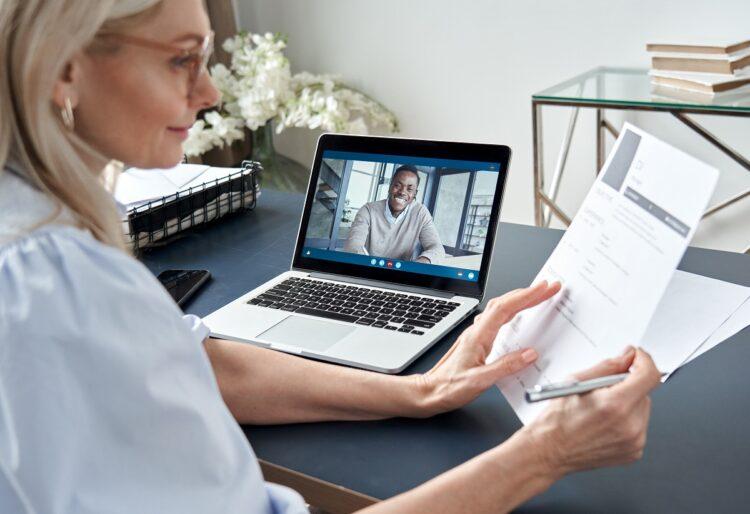
Before we get into whether you should or shouldn’t take this action, we might want to talk about what it really means.
Hopefully, you have an idea of what LinkedIn is and how it works.
If not, I’ll let you play a little catch-up before you continue here.
Outside of the technical meaning of LinkedIn connections, on a professional level, what are you really getting into?
LinkedIn is all about professional connections, so you don’t have to be real-life buddies with someone to connect with them on the platform.
That’s kind of the point.
And, interviewers are in charge of hiring people.
It seems like a good connection to have, especially when you’re trying to land a job.
But, connecting on LinkedIn does come with implications.
Since it’s a social media platform, keeping up with your connections can be a lot of work, and you can bet that hiring managers get a lot of connection requests.
So, you’ll want to think about whether or not your request is a benefit or burden to the other person before you send it.
In fact, one of the best ways to understand whether or not you should make the request is to think about the pros and cons.
There are definitely compelling reasons to send the request, but there are also reasons not to.
Let’s explore both.
#1 Why You Would Want to Add Interviewers on LinkedIn

Considering the many implications of LinkedIn and interviews, it brings up an interesting question.
Why do you even want to do this?
Are you just a social butterfly who wants to connect with everyone you ever meet?
Barring that, there are some potential professional benefits to connecting with an interviewer.
For starters, the person doing the interviews clearly has some power over whether or not you get a job.
You might want to connect with them as a way to improve your odds of getting hired.
Or, you might want that connection so that they can easily inform you of additional job openings.
After all, you’re a professional.
You’re a good hire, and you know it, so why wouldn’t they want to keep in touch with you?
It’s also possible that you’re hoping you can use your LinkedIn connection to demonstrate your enthusiasm for the current job posting.
I’m going to get into that in more detail later, but let’s pump the brakes on that enthusiasm.
It might not be as advantageous as you imagine.
I’m going to be exploring all of these ideas in different sections, but these are the most common motivations and justifications for sending that connection request.
Before you jump in with both feet, let’s consider some of the reasons why this might not be a winning idea.
#2 Why You Should Refrain from Adding Interviewers on LinkedIn

The biggest thing to consider is that you’re trying to connect with an interviewer.
They are likely a hiring manager, and they’ll have significant input (if not sole discretion) over who gets the job you’re after.
From a professional point of view, if they connect with you on social media before making their decision, it might not be the best look.
It’s especially a problem if you get the job.
It might come across as favoritism or unfair in some way.
Because of that, a lot of interviewers will decline your request, at least until the decision is made.
There’s another issue too.
LinkedIn is social media, and that means that connection requests can get a little awkward.
Look at it like this.
You’re probably not the only person interviewing for the job.
If every candidate sends a LinkedIn request, then the interviewer is just getting flooded with social media.
It doesn’t help you stand out from the crowd, and it’s really just giving them more work that they don’t need, dealing with all of those requests.
It might be a good idea to keep things a little more formal and traditional to avoid the awkwardness.
Should You Connect With an Interviewer on LinkedIn? (4 Situations)

Ok. You’ve seen some pros and cons to making the request, so what’s the answer?
Should you do it or not?
Ultimately, the answer depends on a lot of things.
If you’re in a situation where it’s not awkward or unprofessional to make the connection, then it’s a good thing to send that request.
The benefits of connecting with an interview are real, and they’re worth the time investment.
But, if the situation isn’t a green light, then it’s better not to make a request.
So, how can you tell when it’s ok to send the request or not?
There are a few key indicators that won’t steer you wrong.
The first is timing.
I have more specific sections on timing below, but here’s the gist.
If the job hasn’t been filled yet, it’s better not to make the request.
If the job is filled, then it’s probably ok to make the request.
There are plenty of exceptions and other things to cover, so let’s get past the rule of thumb and start talking about the finer details here.
#1 Before the Interview

I mentioned the job posting, but this is also important.
Have you even been to the interview yet?
If you haven’t met your interviewer in person yet, then the LinkedIn request is going to come off a lot more awkward.
You aren’t really necessarily professional contacts yet, so this all gets a little weird.
Now, in some cases, you’ll actually have a lot of direct communication with your interviewer before the actual interview happens.
In such a case, then consider the two sections below.
But, until you have at least some rapport with the interviewer, sending the request is more likely to come across as desperate, presumptive, or especially awkward.
It’s always ok to wait a little bit and connect later.
Connecting on LinkedIn shouldn’t help you get the job in question.
This connection is really about professional networking.
Interviewers Mentioning LinkedIn
Assuming that there has been communication between you and the interviewer, this is a great thing to consider.
If they brought up LinkedIn, then that might actually be an invitation to make the connection.
You’ll have to read the context on your own, but every hiring manager is different.
Some will have LinkedIn information in their email, and they’re happy to make new connections every day.
In such a case, it’s not really awkward to send that request.
Even better, some might encourage you to reach out to them on LinkedIn.
If they say it outright, it’s not just ok to connect on LinkedIn. You should make it a priority.
This indicates that they prefer to do some of their communication on the social media network, and failing to connect could actually hurt your job prospects.
You might miss important communication, and that could come back to haunt you.
Applicants Asking About LinkedIn
On the other hand, the signals aren’t always clear and easy to follow.
Again, you’ll have to discern the social situation for yourself, but it might be better to directly ask about LinkedIn.
You can gauge their reaction to see if it’s ok to reach out on the site or not.
If you’re going to ask, be prepared for any answer.
As I mentioned earlier, some interviewers will consider it unprofessional to add you until the hiring decision is finalized.
So, they’ll either hesitate to add you, or they’ll outright refuse.
That’s fine.
It doesn’t mean that you’ve tanked the interview.
It just means that now is the wrong time to connect on LinkedIn.
Others will say yes, in which case it’s fine to move forward with the question.
The more subtle situation to understand is avoidance.
If they avoid giving you a clear answer as to whether or not you should reach out on LinkedIn, assume that the answer is no and hold off on any requests for the time being.
#2 Right After the Interview

Once you have the interview, there has been more conversation between you and the interviewer.
That gives you a lot more information to try to discern your social situation and see what is appropriate.
But, things aren’t always clear.
So, if there’s any doubt, it’s best to keep waiting.
Don’t send that LinkedIn request just yet.
Instead, wait until the job is formally filled, and then you can send the request.
You might have other ideas in mind, so keep reading.
I’m going to dispel a common myth.
#3 Follow-Up After the Interview

This is probably one of the most important things you’ll read today.
I mentioned this briefly, but LinkedIn connections are typically not a good way to demonstrate your enthusiasm for the job.
It’s tempting to use the social media network to try to reach out to the interviewer and show that you’re really after this job and the right person for it.
As I mentioned before, if you consider how many other applicants likely think this way, you’re really just contributing to LinkedIn spam.
And, that’s a best-case scenario.
It’s also possible that you’re putting the interviewer in an uncomfortable position.
On top of that, many people simply find it awkward.
Reaching out on LinkedIn might not tank your chances of getting the job, but it’s probably not helping at all.
When you talk to recruiters and professionals in this space, the advice is almost always the same.
Skip LinkedIn until after the job is filled and the decision is final.
Until then, a better way to demonstrate your enthusiasm is with a thank you card.
It demonstrates professionalism in a way that doesn’t demand attention from the interviewer.
It shows that you’re committed enough to the job to take the time to make and send the card, but it doesn’t reek of desperation, and it’s very unlikely to stoke accusations of favoritism.
Stick with the thank you card, and if you haven’t heard back within the timeframe they described, a follow-up email or phone call is also reasonable.
#4 After the Hiring Decision

We’ve covered a lot of different situations.
The last thing to think about is timing.
It might be uncomfortable to send a LinkedIn request while you’re waiting to hear about the job in question.
But, once the job is filled, you don’t have to worry about favoritism anymore, right?
That’s exactly the case.
Generally speaking, it’s fine and acceptable to send the request after the job is filled.
Now, you might be thinking that this depends on whether or not you got the job, so let’s take a minute to go over both possibilities.
Should you send the request if you did get the job?
What about if you did not get the job?
If You Got the Job
If you got the job, it’s natural and normal to want to connect with some people at your new place of work.
Sending a request to the interviewer should not be a problem at all.
Whether or not they really respond depends on a lot of things, but you shouldn’t be worried that you’re committing a faux pas by reaching out.
It’s fine.
Ideally, the interviewer is your first contact at the new company, so establishing the connection is a nice way to start getting to know the new company and its culture.
You don’t need to bug the interviewer if they seem distant or busy, but it’s a nice first connection to make.
More than that, since you’re the new hire, connecting with the interviewer is likely to bridge connections to other employees at the new company, and that’s how you really start expanding your new professional network.
It’s reasonable.
It’s borderline expected.
Go for it without fear.
Naturally, if there is any communication from the interviewer or company that suggests staying off of LinkedIn, then heed those warnings.
But barring such direct advice not to use the site, you’re fine to make the request.
If You Didn’t Get the Job
Here’s what might be interesting to some of you reading this.
Even if you don’t get the job, it’s still fine to send the LinkedIn request, as long as the job is formally filled.
Sure, you’re not part of the company, but as I said before, interviewers are good people to have in your network.
As long as you didn’t completely bomb the interview, the hiring manager is actually likely to accept your connection request.
They might want to keep your name handy in case another position opens up.
And, having that LinkedIn connection might help you hear about new openings more efficiently.
Even outside of that scenario, connecting with the interviewer expands your LinkedIn network in general.
That might lead you to other hiring managers and other potential jobs.
Generally speaking, it’s reasonable to request the connection when the job is filled, and very few people would ever hold it against you to try to expand your professional network while you’re job hunting.
Even in the worst case, you already didn’t get the job they interviewed you for, so you’re not exactly tanking opportunities by sending the request.
- LinkedIn Not Showing Salaries: Why?
- Is Linkedin Worth It?
- LinkedIn Profile Out of Network: How to Access?
- Uncovering the Mystery: does linkedin show who viewed your profile?
- Commenting for Better Reach on LinkedIn: What CFBR Means