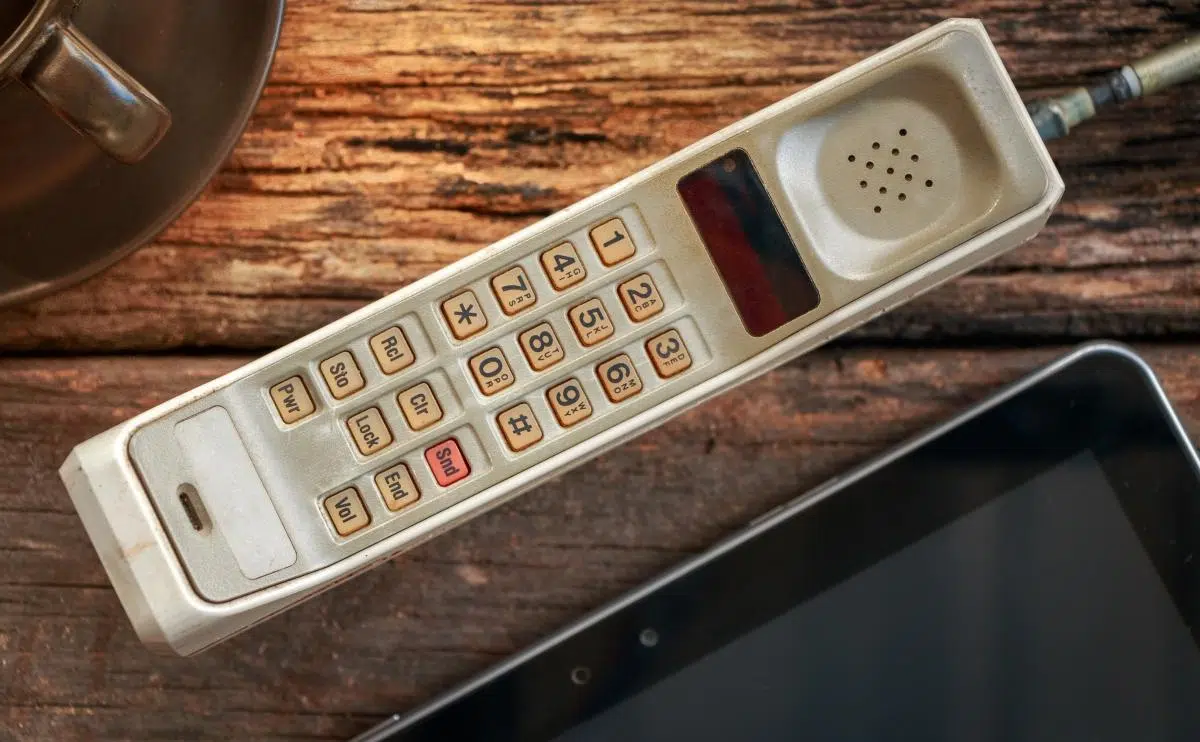
The 1980s, a decade of neon lights, iconic music, and the rise of the cell phone. But have you ever wondered if a bulky, brick phone from the 80s could still function in today’s digital age?
Dive into the world of 1980s cell phones, their evolution, and the intriguing ways tech enthusiasts are bringing them back to life.
Let’s jump right into it!
Were There Even Cell Phones in the 1980s?
The 80s were a long time ago, right?
Did cell phones even exist?
As a matter of fact, they did.
The very first working cell phone was actually developed and released in 1973, almost a full decade before the 1980s.
By the 1980s, there was an established cellular network around the United States (and in other countries), and it was possible to get a cell phone.
They were substantially different from modern smartphones, of course, but they did exist.
Cell phones of the 1980s were large and heavy, they had spotty coverage and reception, and they were unreliable at the best of times.
They were also super expensive.
Despite all of that, cell phone usage did grow substantially across the decade, and by the 90s, owning a cell phone wasn’t completely uncommon.
How Does a 1980s Cell Phone Work?
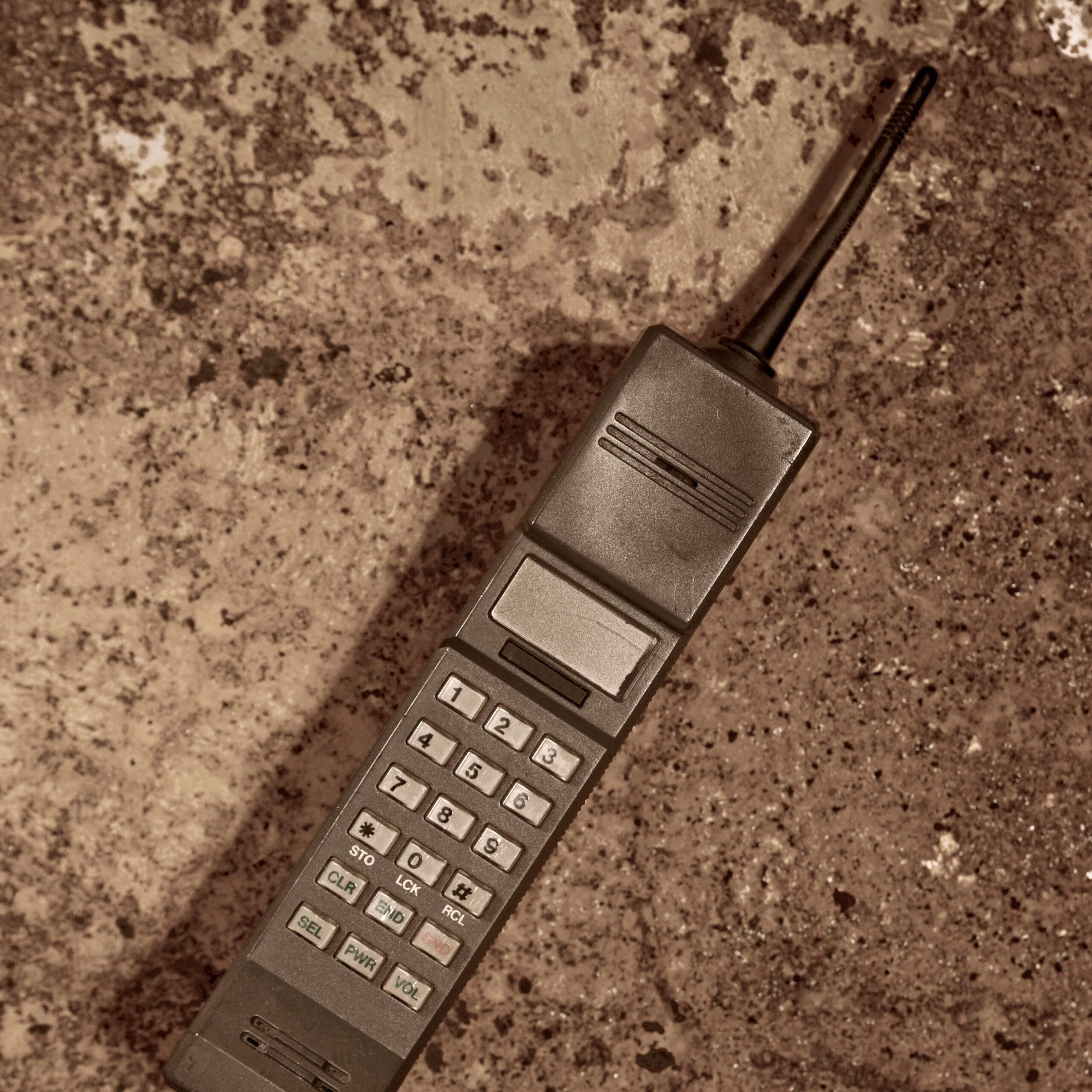
Now that we know cell phones really were around in the 80s, we can talk about how they work in an effort to see if they can still work today.
This might make more sense if I first remind you a little bit about modern cell phones.
You’ve heard of 3G, 4G, and 5G, right?
These are more modern cellular network modes, and they are what modern phones use for mobile connections.
Even if you have the latest 5G phone, it’s capable of running on 3G networks—it will just be slower.
With that in mind, we can talk about the key attribute of 80s cell phones.
They were all designed to work on a 1G cellular network.
This is a much older network design.
It was slower, less reliable, and not digital.
But, it allowed for cellular connections, allowing truly mobile phones to exist.
This is really the crux of the whole thing.
80s cell phones ran on 1G.
Yes, 1980s Cell Phones Ran on 1G
Knowing that we need to get a little deeper into the technology of 1G to understand why 1980s phones don’t work today.
The old 1G network of the 80s was an analog system that only supported voice calls.
There was no texting, and you definitely couldn’t try to get on the internet or share video or picture media on that network.
On top of that, 1G connections topped out at a speed of 2.4 kbps.
Also: 90s camera quality vs. 80s & 70s: Why so poor?
To put that in perspective, average internet speeds today are above 10 Mbps, which is about 5,000 times faster.
Here’s another way to look at it.
If you connected a modern phone to a 1G network and tried to send a picture that you snapped on your phone (pretending that such a thing is even possible), it would take roughly two hours to send a single picture at maximum 1G connection speeds.
On top of that, this was the very first generation of cellular networking.
Calls dropped all the time.
Even when they didn’t, distortion was common and call quality was poor.
It’s an old system that is clearly outdated by modern standards.
Is 1G Network Still Around?
That’s why it won’t surprise you to learn that 1G has been discontinued—in every country in the world.
1G was eventually replaced with 2G, and 2G is actually digital.
With a digital network, massive improvements were made to cellular communications, and that’s why cell phones really started to go mainstream in the 90s.
Then, 3G came along with much faster connections and reliability—and also broader national/international coverage—, and cell phone adoption rates went through the roof.
Since 3G, everything has been made reverse-compatible.
That’s why modern 5G phones can still work on 3G networks.
This compatibility decision has made it a lot easier to incrementally upgrade cellular networks.
If a region in a country isn’t upgraded yet, new phones will still work, just a little slower.
Getting back to 1G, reverse compatibility was never an option.
That’s because 1G was an analog system.
It worked on fundamentally different technological principles as compared to the other cellular networks.
2G and newer networks are all digital, and analog and digital signals are very, very different from each other.
The hardware on 80s phones literally can’t connect to digital networks and vice versa.
Since digital phones took over the world, it really made sense to discontinue support for the older 1G networks.
What Happens if You Try to Use a 1980s Phone Today?
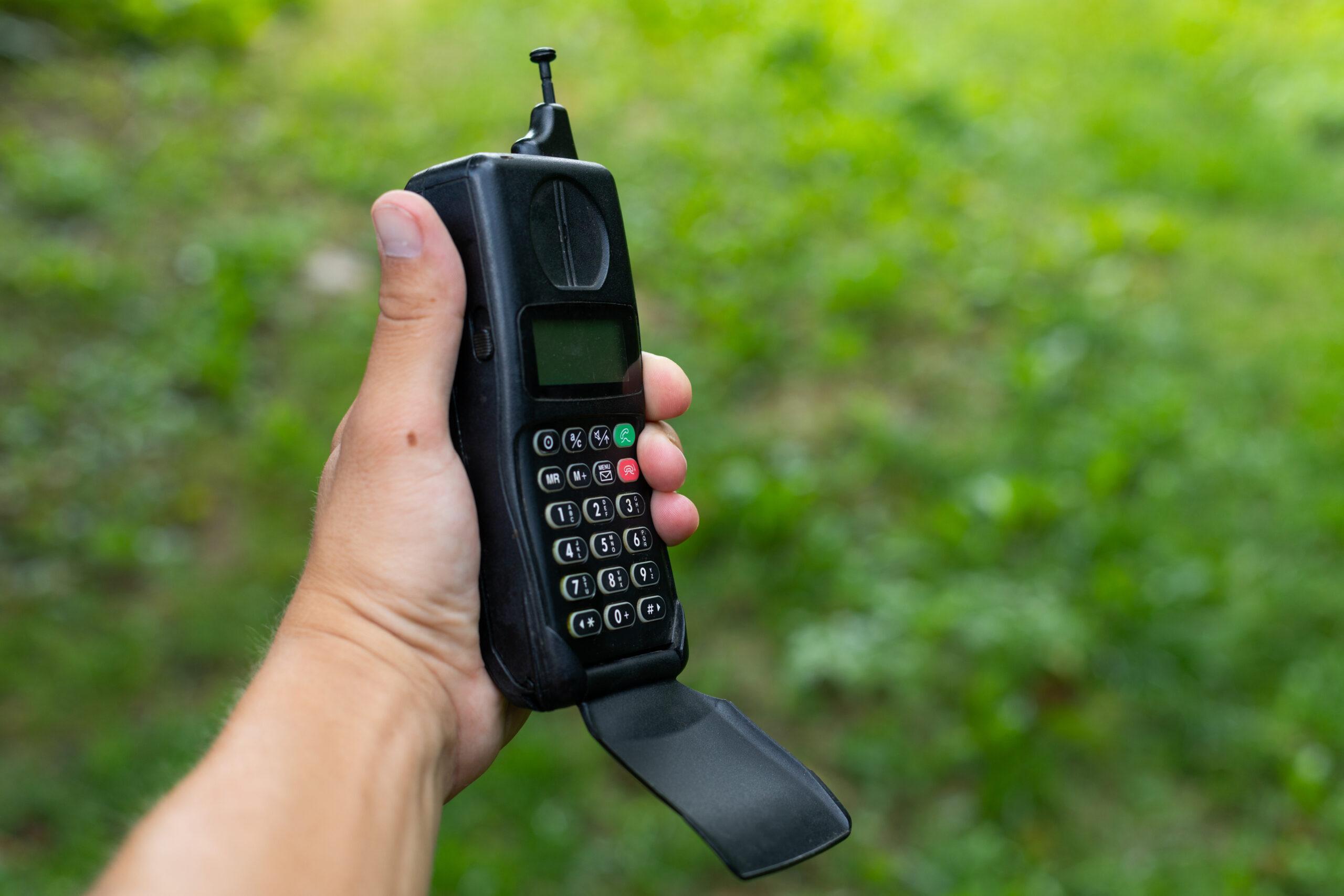
You can see where this is headed, but allow me to paint a perfectly clear picture of how this all works.
Let’s say you browse through your attic, and you find an old 1G phone from the 1980s.
You try it, and you’re able to turn it on.
That’s already a miracle, but let’s go with it.
Since it turns on, you see if you can make a call.
When you try, the phone can’t connect to any other numbers.
In fact, you can never get any level of service at all.
This is because there are no 1G networks for the phone to find.
The infrastructure that made these phones work is absent from the world.
As a matter of fact, the very last surviving 1G networks were taken down in the 2000s, roughly 20 years ago.
This means that a 1G phone cannot work as intended in the modern world.
It might power on.
You might be able to get it to dial, but you won’t be able to connect to a functioning network.
Now, there are ways to try to get around this, and I’ll take you through them a little later.
For now, the lesson is that an 80s phone can’t work in the way it was designed.
Are There Still 1G Phones?
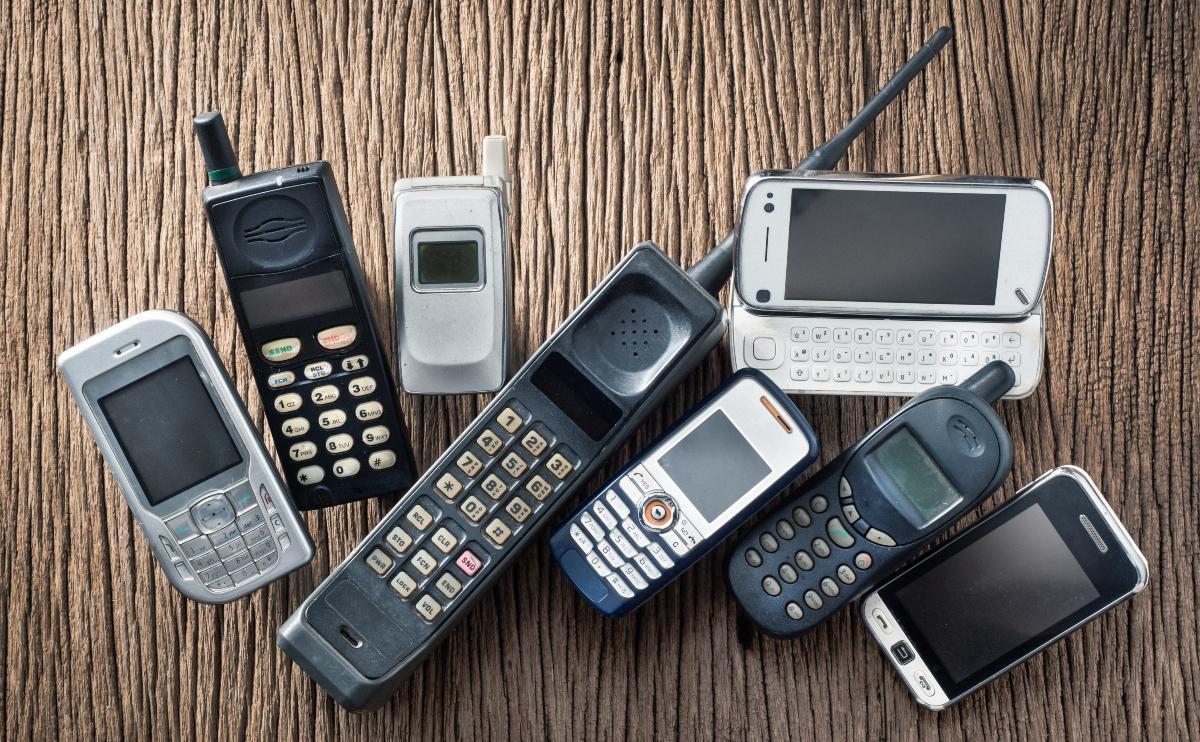
Technically, yes.
1G phones do still exist, but they’re rather difficult to find.
Mostly, it comes down to collectors and enthusiasts.
There are people who have held onto and maintained old phones for personal reasons, and in a lot of ways, those phones are still fully functional.
You can turn them on, you can dial numbers, and you can do just about anything with them.
But, unless they have a hardware upgrade, those phones still can’t connect to any network, so they still can’t place calls.
There’s more to consider, too.
A 1G phone is going to be at least 30 years old by now.
Phone technology usually doesn’t last that long.
So, without deliberate, long-term care, any 1G phone you might stumble across will probably be severely damaged and dysfunctional.
When I said that these phones technically still exist, I was not implying that they are commonplace.
So Does an 80s Cell Phone Work?
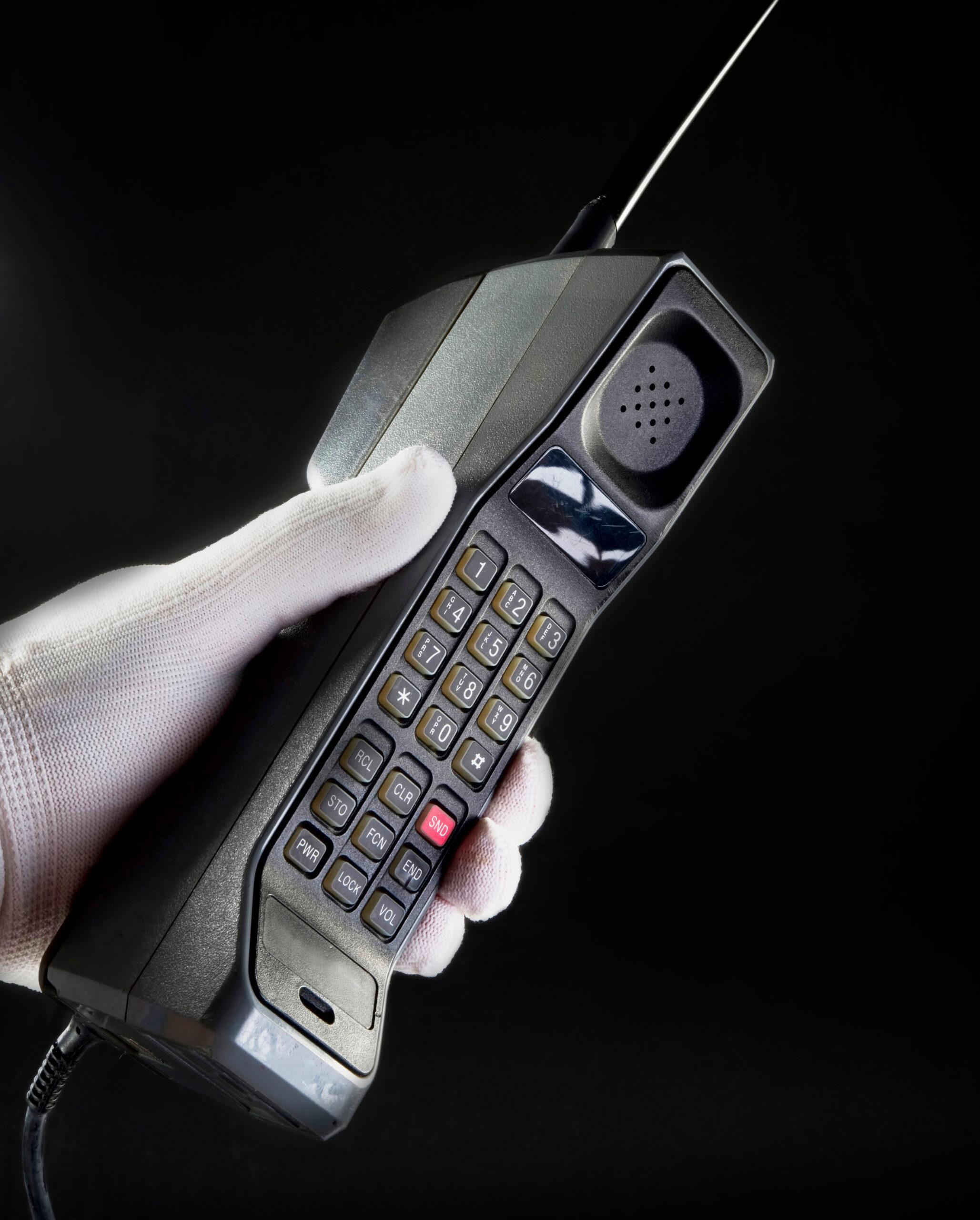
Based on everything you’ve read so far, it seems pretty easy to say that 80s cell phones don’t work anymore.
By and large, that’s true.
But, there are some exceptions to cover, and that’s where I think this conversation becomes a lot more interesting.
First, let’s cover the pedantic point of view.
If you have an 80s phone that powers on, by some definitions, that means it works.
So from that point of view, there are definitely 80s cells that work.
I’m more interested in whether or not a phone can place a call, since that’s its purpose, and without some modifications, 80s cells don’t work.
Those are the most direct answers I can give you.
With all of that covered, let’s get into the fun stuff.
Let’s talk about how you can actually make an 80s cell work.
Are There Ways to Make an 80s Cell Phone Work? (2 Methods)

Yes, it is possible.
Let’s keep things as simple as possible.
There are basically two ways to make an 80s cell phone work.
You can mod the phone so that it has modern components that work on modern networks.
Alternatively, you can invest in something known as a retro phone.
Basically, it’s a modern phone made to look like an older phone.
It’s purely an aesthetic choice at that point.
#1 Modifications

Ok. Let’s say you have an 1980s cell phone.
Either it was cared for really well, or it’s been repaired.
Either way, it can power on just fine.
At this point, it can’t place a call, but you can make modifications (or have a professional do this for you) that will actually make the phone functional.
Basically, you need to upgrade it to run on a 3G network (since most 2G networks around the world are defunct).
Technically, you could upgrade it to run on 4G or 5G, but the 3G upgrades are going to prove simpler.
How do you do that?
It’s not simple, and you’re definitely going to end up with a Frankenstein monster of a phone.
First off, you need a 3G antenna.
That’s easy enough to find and install. No big deal.
The problem is that your 3G antenna won’t be able to communicate with your ancient phone.
The 3G antenna is digital, but your phone was built before digital was even a thing.
So, you need to change some of the insides of your phone so that it can make sense of the digital signal provided by the 3G antenna.
Basically, you need a new circuit board for the phone.
Getting a custom circuit board for your large 1980s phone won’t be easy, but it can be done.
Since you’re installing a modern circuit board, it will be digital, and it will have the ability to house additional parts you might need to make it all work.
Let’s pause for a moment.
Even doing the things I’ve described is already challenging.
Connecting a modern circuit board to an 80s cell phone is going to require custom soldering and a lot of planning and work.
This is basically a hobby project for a cell phone enthusiast.
But, if you get the circuit board fully attached, your phone will actually be able to process 3G signals.
You’ve almost modified your 80s phone to a point where it can work.
You just need one more key piece.
In order to successfully connect to a 3G network, the phone will require a SIM card.
This card basically handles identification for the phone so that the network knows where to route information to and from the phone.
With those mods, you can make an 80s cell phone work.
Basically, you’ll have a modern phone encased in an 1880s-style phone housing.
It’s a Frankenstein monster of a phone to be sure.
And, just to be clear, I really glossed over the steps here.
That’s not a complete guide to success.
It’s the overview of what you need.
If you go through the project for yourself, you’ll see that it’s an involved process.
#2 Retro Phones
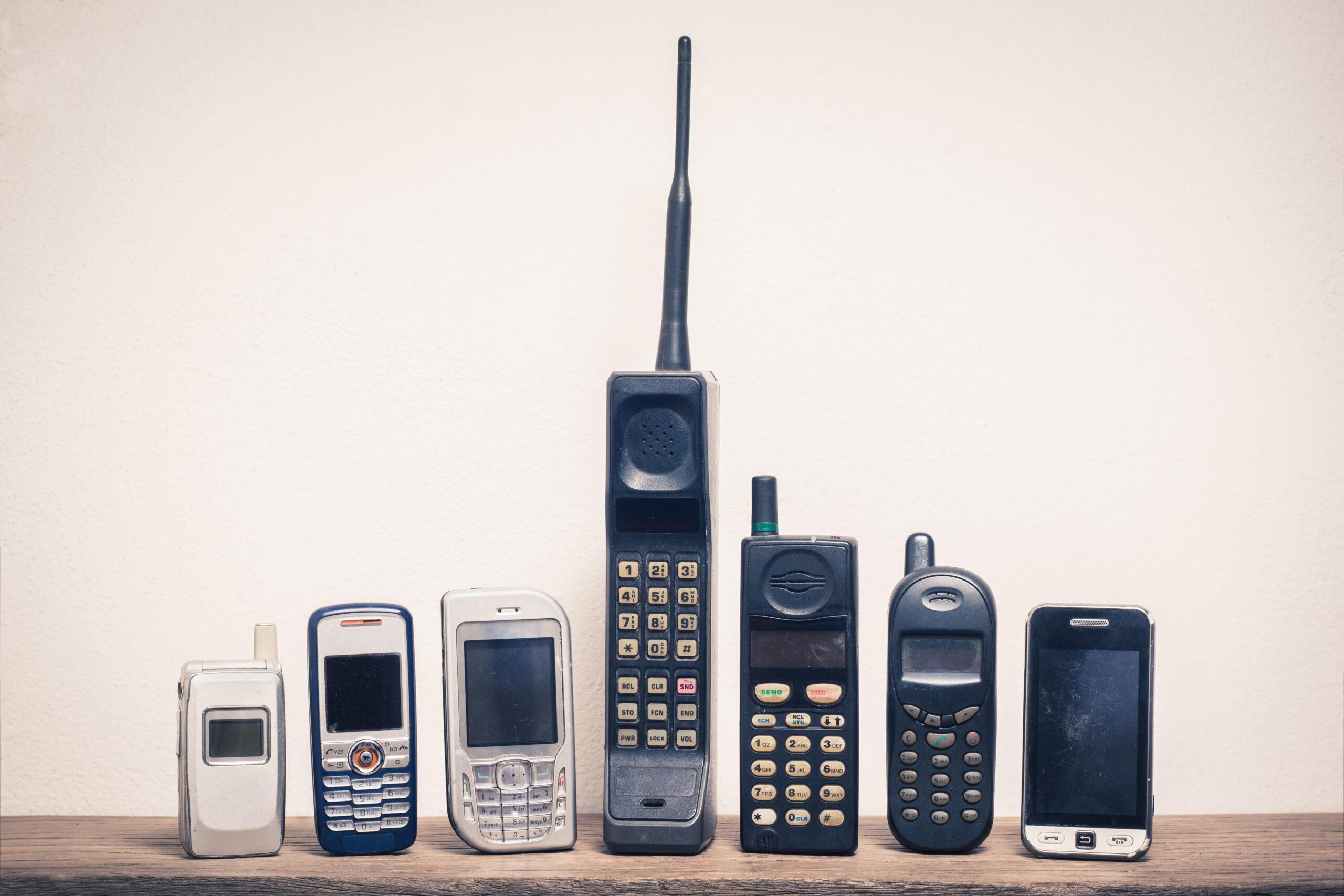
This option is so much easier.
A retro phone is something that uses modern technology but packages it in a way that makes it look like older technology.
This concept was more popular a few years ago, but you can still find a lot of options.
One way to think of it is that a manufacturer did all of the modding stuff I mentioned in the previous section.
So, you just have to buy a phone that already works.
There are a few things to know about retro phones.
First, they are not all made the same.
If you’re looking into getting a retro phone, read the labels to make sure you know how it works and if there are any compatibility issues.
If it’s a 3G/4G/5G phone, then it will work fine on modern networks, but there are retro phones that aren’t cellular.
It’s worth remembering.
Second, they come in a lot of different physical styles.
It might be hard to find one that looks like an 1980s cell phone.
The internet is a big place, so if you’re determined enough, you can surely find what you want.
The point is that some things will be very easy to find while others might take some digging.
Lastly, if it is a cellular phone, then it needs some kind of cellular plan to function.
You can have unlocked phones with a lot of freedom, but ultimately, you need to work with a carrier to make sure your phone can connect to the network.