Here’s the meaning of when a phone rings and then you hear a busy signal:
- Call waiting
- Voicemail
- Blocked number
- Account issues
- Hardware or software problem
- Out of range
- Network congestion
If you want to learn all about the reasons for when a phone ring and then a busy signal, then this article is for you.
Let’s jump right in!

Phone Rings Followed by a Busy Signal?
We’ve all heard classical music when put on hold. Or, much worse, the silence that makes you question if you’re on hold or if the call dropped.
We expect those strange sounds on a call, but the busy signal is more like a modern myth.
You dial a number, and the phone rings.
You let your guard down, ready to talk, but when you least expect it, the busy signal strikes. You’re left with no choice and must accept defeat.
Or maybe you try again. What does it mean if you succeed the second time?
Have you ever asked, “Why does my phone ring once, and then I hear a busy signal?”
Read on to shed some light on the mythic busy signal:
What Does it Mean When the Phone Rings and then You Hear A Busy Signal?
The busy signal, the busy tone, congestion tone, or engaged tone, is an audible signal that a call cannot be processed or completed.
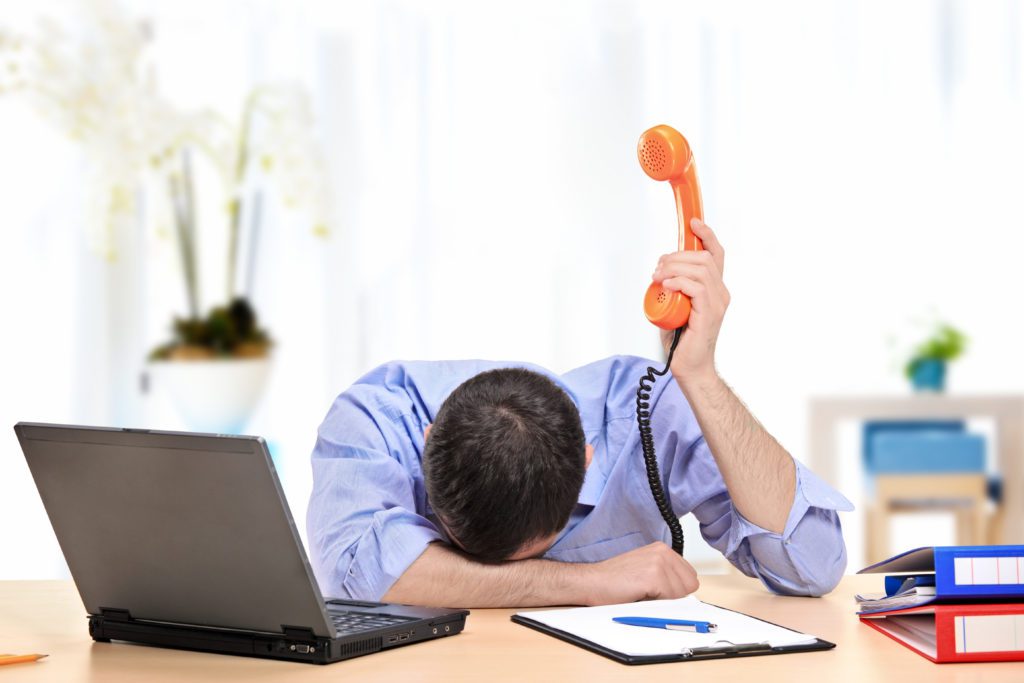
In the United States, the sound has a dual-frequency of 620 Hz and 480 Hz.
The tone is interrupted 120 times each minute.
Imagine that as a drummer’s beat instead of a tone—that would be one tired drummer!
It might require some trial and error to discover which reason causes you to hear the busy signal, but let’s talk about them.
The sooner we name them, the sooner you can find your answer.
Let’s get started:
#1 Call Waiting
Call waiting optimized phone lines when it arrived in the 1970s to North America.
Before call waiting, if you were already using the phone, no other caller could connect to your phone line.
They’d have to give up and try your number again later.
And you would never know.
How Does Modern Call Waiting Work?
Call waiting functions as a signal to both the caller and the recipient.
If a phone number is busy, you’ll hear a ring and then be forwarded to voicemail.
If you’re the recipient, you’ll hear a tone or see an alert message.
The recipient can respond by adding the second caller or hanging up on the first.
Or the recipient can ignore the new call.
However, some services will alert a caller if the recipient is busy in a conference call.
The phone number rings, then a busy signal.
The same alert system applies to cell phones and landlines.
How Does Conference Calling Work?
Bell Labs pioneered the original conference call system in 1956.
It could connect three phone lines and pair with a small screen, which sent a choppy slideshow of images while the callers talked.
We’ve had a lot of time to improve, and now some devices allow conference calls with a thousand participants.
Most of us can’t allow more than five on our cell phones, but we’ve come a far way from three.
If you find yourself late to a conference call and hear a ring and then that busy tone, you might not have made it in time to join in.
#2 Voicemail
There’s a saying in diagnostic medicine, “When you hear hoofbeats, don’t look for zebras.”
Occam’s Razor is a rule that describes a similar philosophy: the simplest answer is usually the right answer.
Sometimes a busy signal is just a busy signal.
The number is overwhelmed, and you should leave a message.

If the phone rings twice, then a busy signal, it’s possible the recipient manually sent your call to voicemail.
#3 Blocked Number
If you call a number, hear one ring, and are sent straight to voicemail, it might mean your number is blocked.
You can contact the number and leave a message, but the recipient won’t receive a notification when you call.
You’ll hear that first ring, but they won’t.
A blocked number isn’t always the case, and it helps to understand the who and why.
Consider the recipient you’re calling.
Are you aware of any reason the recipient would block your number?
Does this happen when you call from your home number or your cell, or both?
It might not be only your phone that came to a sudden stop. Instead, the recipient might have blocked all unknown numbers.
If you know the recipient of the call personally, reach out through other communication platforms or devices.
If a landline phone rings once, then a busy signal, it’s likely the recipient who created the block.
If a cell phone rings then goes to a busy signal, check your settings. Did you accidentally block the recipient?
Again, if you know the recipient personally and the block wasn’t intentional, ask them to check their settings.
#4 Fast Busy Tone
What does it mean if the sound you hear sounds like it’s competing for the world’s fastest busy signal?
Did the sound recording have one too many cups of coffee before showing up for work?
The fast busy signal, or the reorder tone, signals a missing transmission path.
There are a few potential explanations:
Account Issues
If every number you call starts with a ringing and cuts off immediately with a busy tone, you might have an account problem.
An overdue payment, roaming issue, or other account conflicts might result in your provider suspending your cell service.
You will need to call your service provider or contact them through their customer service site.
Hardware or Software Problem
Gone are the days when installing a computer required an entire room.
Gone are the years of choosing between the internet and a phone call.
We can do it all with a handheld device capable of a complicated operation.
Each year, with each update, processing power is faster than before.
While communication technology is better than ever, we sometimes forget that these phenomenal devices aren’t perfect.
Hardware or software problems are the least likely reason for your phone to start ringing only to stop with a busy signal.
Still, it’s good to eliminate this problem with a few checks.
Powering off your phone and restarting or removing the battery can help.
Out of Range
Alas, coverage has not spread equally across the earth.
When a cell phone rings then a busy signal, you might be making a call from an area with a coverage gap.
You can try calling from a different area or even a block up the street, which might solve the issue.
Also, look up the coverage area of your service provider.
Network Congestion
Sometimes it seems like we live in a culture saturated with unprecedented technology.
Then network congestion drops back in the age of switchboards.
If you haven’t watched an old movie featuring a switchboard lately, you might be puzzled.
Once upon a time, if you wanted to call someone, you couldn’t phone directly. You’d call a switchboard.
A telephone switchboard worked by manually connecting plugs and jacks.
A group of operators sat side-by-side in front of a panel of cords (plugs) and holes (jacks).
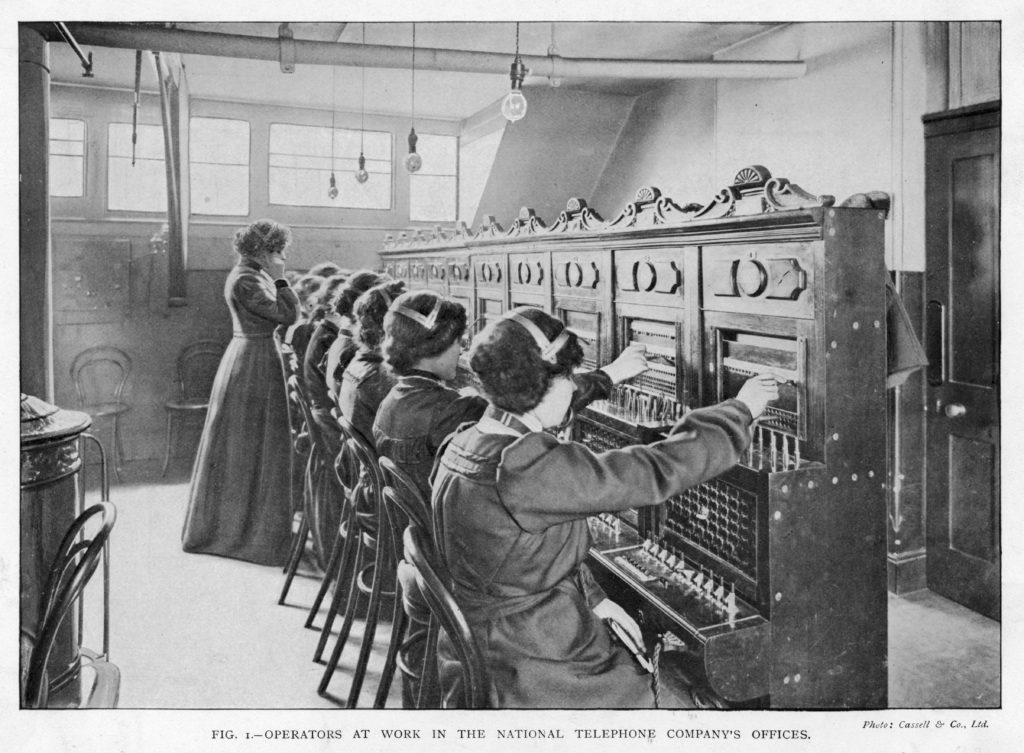
The switchboard operator would answer your call, and you’d tell the operator who you wanted to reach.
Then, the operator would physically connect a wire to put you through.
If the call was a longer distance, the operator might need to connect your call to a switchboard somewhere else.
Then another operator would link from there. It was complicated.
In those days, you’d wait until the line was unoccupied. You would have no way of knowing how long the wait would last.
There was no music unless you ordered the switchboard operator to sing.
The modern network doesn’t rely on ladies physically connecting anyone. The millions of connections happen at lightning speed.
Yet, sometimes a network reaches that million-and-one call, and it can’t handle that one more.
Like the switchboard lady, the network can’t connect your call, and you must wait.
Network congestion can happen if you’re calling from or calling to a busy area.
Thankfully, unlike in those black-and-white movies, this lack of connection is rare.
Try another call in a few minutes. If you get through, you were probably that million-and-oneth caller.
What Is the History of the First Busy Signal?
The story of the busy signal begins with an undertaker in Kansas City.
While not every undertaker is a suspicious madman, Almon Brown Strowger was also an inventor.
Strowger believed that switchboard operators weren’t connecting calls to his business.
Now, there’s a lot of speculation about whether or not Strowger was paranoid.
Were jealous mortuary businesses paying switchboard operators to block Strowger’s calls?
We may never know why Strowger wasn’t getting the volume of calls he expected.
Still, we know it was why he invented the automatic telephone exchange in 1891.
He wasn’t the sole inventor of an automatic exchanger, as there are a handful of people worldwide with ties to that honor, but his invention was successful.
One year later, the Strowger Automatic Telephone Exchange Company had seventy-five users.
That same year, both Dr. Rudolph and his secretary called Dr. Rudolph’s pharmacy simultaneously.
He was the slower caller and was the first to know, “What does it mean when my phone rings then a busy signal?”